Menopause joint pain in Australia: why it happens and what helps
Menopause joint pain is one of the most common symptoms of perimenopause and menopause, and for many women one of the most physically wearing. The aching, stiffness and reduced mobility are linked to falling oestrogen, which normally acts as an anti-inflammatory throughout the body. When oestrogen declines, some of that protection goes with it.
It is also one of the symptoms women are most likely to have had dismissed, misdiagnosed, or been told to live with. If you have spent time in physio, had scans that showed nothing, been told it is ageing or your weight or your thyroid, and still cannot get in and out of the car without wincing, this article is for you: why it happens, and what genuinely helps.

You are not imagining it
Before the clinical explanation, the thing that probably matters most right now: what you are experiencing is real, and you are not alone in it. Joint and muscle pain is a well-documented part of the menopause transition, and it is consistently under-recognised.
A common pattern is described in menopause care: years of unexplained pain, a GP visit that leads to a scan, a scan that shows nothing, a referral to a rheumatologist or physio, treatment that helps a little, and pain that keeps coming back, while the hormonal picture that may be driving it goes unaddressed. Diagnoses that do not quite fit, such as early arthritis or a thyroid problem, can accumulate along the way. If any of this sounds familiar, the most useful next step is often a doctor with specific menopause training who will assess your pain in its hormonal context, not just as an isolated joint problem.
What is menopause joint pain?
Menopause joint pain, clinically known as menopausal arthralgia, is aching, stiffness or reduced mobility in the joints associated with declining oestrogen during perimenopause and menopause. Oestrogen helps maintain cartilage and the fluid that lubricates joints, and acts as a natural anti-inflammatory. When levels fall, joints can become painful or stiff, often without any structural damage showing on scans.
What makes this difficult to navigate is that the pain is real and sometimes severe, but standard investigations frequently show nothing wrong. That leaves women either dismissed or chasing the wrong diagnosis. Researchers now describe a musculoskeletal syndrome of menopause: a recognised cluster including joint pain, muscle aching, reduced muscle mass, reduced bone density and tendon vulnerability, all linked to the same underlying hormonal change. It has a name, a cause, and treatments that help.
What does menopause joint pain feel like?
It typically feels like widespread stiffness and aching that is worst first thing in the morning and eases as you move through the day. This morning-stiffness pattern is one of the features that distinguishes hormonal joint pain from structural arthritis, which tends to worsen with sustained activity.
Women describe it in many ways: joints that feel like they aged overnight, a deep ache through the hips or knees with no clear injury, fingers stiff and swollen after sleeping, or a generalised body heaviness that feels more like all-over soreness than pain in one spot. Some experience it as a tendonitis that seems to move around, the shoulder one month, the knee the next.
The joints most commonly affected are the knees and hips (especially weight-bearing pain), the hands and fingers (stiffness and swelling, worst in the morning), the shoulders (including frozen shoulder, which is more common at this life stage), and the lower back. Pain across multiple joints at once is a common hormonal pattern. The pain often comes and goes, better in warm weather, worse after a poor night’s sleep, and that variability is itself characteristic of hormonally driven joint pain.
Why does menopause cause joint pain?
Oestrogen receptors exist throughout joint tissue, cartilage, tendons and muscle. As oestrogen declines through perimenopause, inflammation can increase, joint lubrication can decrease, and cartilage becomes more vulnerable. Declining testosterone also plays a part in the loss of muscle mass that supports and stabilises joints. The combined effect on the musculoskeletal system can be significant and cumulative.
In Australia, perimenopause typically begins in a woman’s mid-to-late 40s, with menopause on average at 51 to 52, and the transition can last several years. Joint symptoms can be present for a long time before anyone connects them to menopause, particularly because they often appear before periods become irregular, when nobody is thinking about menopause yet. The Australasian Menopause Society notes that musculoskeletal symptoms are among the most under-recognised aspects of menopause care.
Will menopause joint pain go away?
For many women it does improve, though how quickly and how completely depends on a few things.
- Where you are in the transition. Perimenopause, with its fluctuating hormones, often produces more intense symptoms than postmenopause. For some women, pain eases once hormone levels stabilise after the final period, though there is no reliable way to predict how long that takes.
- Whether an underlying condition has developed. The changes of menopause can trigger or accelerate osteoarthritis, particularly in the knees and hips. If that has happened, the pain needs its own targeted management alongside any hormonal conversation.
- Whether the hormonal driver is being addressed. For symptoms that are genuinely hormonal, treating that driver tends to make the biggest difference.
What actually helps menopause joint pain
The most useful approach usually combines addressing the hormonal cause where appropriate with strong, consistent musculoskeletal support. None of these is a magic switch, and they work best together.
Hormone therapy (MHT), worth a conversation
Oestrogen has an anti-inflammatory effect on joint tissue, and there is evidence that some women’s joint symptoms improve on MHT, and that symptoms can return when it is stopped. That makes it a legitimate option to discuss with a menopause-informed doctor, weighed up against your individual health history. It is not guaranteed to resolve joint pain, and it is one part of the picture rather than the whole of it. Our guide to MHT in Australia covers how it works and how it is prescribed.
You may also see testosterone suggested for joint pain. It is worth knowing that in women, testosterone’s only evidence-based use is for low sexual desire, there is no testosterone product approved for women in Australia, and it is not an established treatment for joint pain. If a provider raises it, it is reasonable to ask what they are treating and what the evidence is.
Strength training, genuinely first-rate care
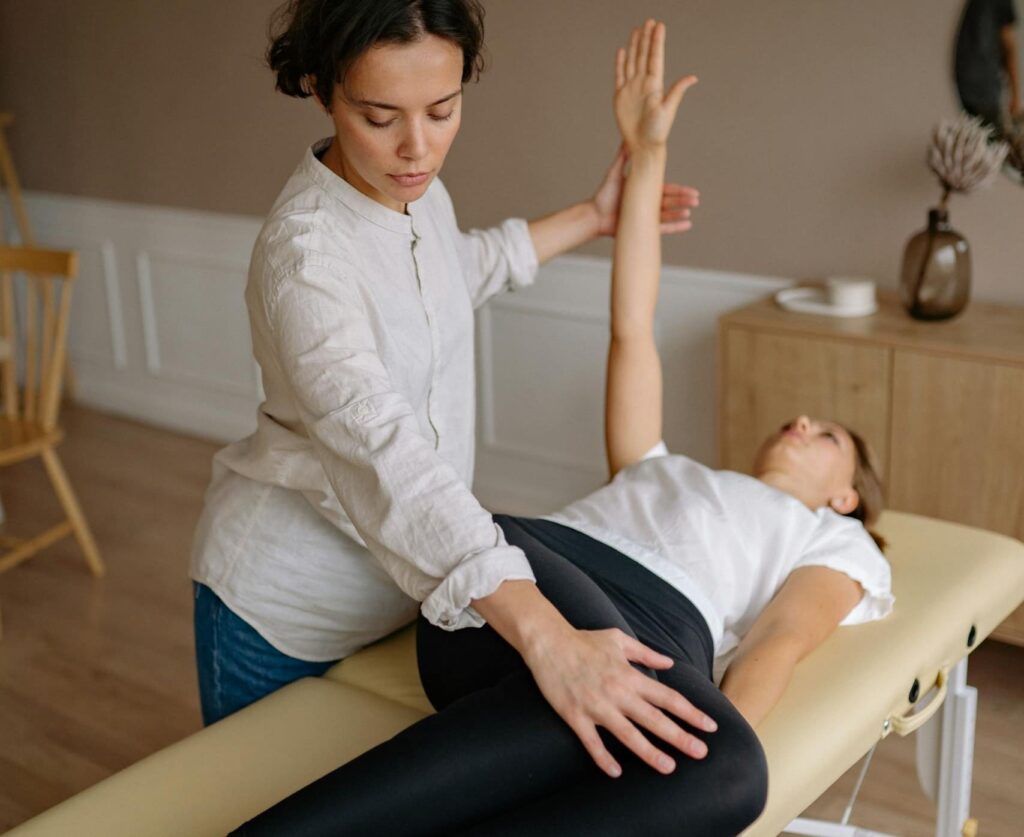
This is not a consolation prize for hormones. The muscles around your joints are their main shock absorbers, and muscle mass declines through menopause, so building and maintaining strength directly supports your joints. Strength and resistance work, alongside load-bearing activity like walking, helps preserve the muscular support your joints need and supports bone density at the same time. Around two sessions a week is a meaningful starting point. A physiotherapist with a menopause focus can help you start safely, especially if movement currently hurts.
Anti-inflammatory eating
You do not need to overhaul everything. Consistent shifts help: more oily fish, more leafy greens and colourful vegetables, enough protein to support muscle, and less ultra-processed food and alcohol. The aim is nourishment that supports your joints and muscles, not restriction.
Sleep
Pain and poor sleep feed each other, and menopause already disrupts sleep through night sweats and hormonal change. Improving sleep, and treating the hormonal drivers where relevant, tends to ease pain and fatigue together rather than piecemeal.
The right provider
The shift many women describe comes when they finally see a clinician who looks at everything together and recognises the hormonal pattern, rather than ordering one more scan in isolation. A menopause-informed GP can assess your joint pain in context and talk through the options, and refer on where a structural problem needs separate management. You can browse menopause-informed GPs or providers for bone and joint health in our directory.
When to see a doctor about joint pain
If joint pain appeared in your 40s or 50s alongside other changes you now recognise as menopausal, it is worth a conversation with a menopause-informed doctor. Signals that your joint pain may be hormonal and worth assessing in that context include:
- Pain that is worst in the morning and eases as you move
- Widespread or bilateral aching, multiple joints or whole body, rather than a single isolated joint
- Pain that appeared alongside other changes: disrupted sleep, mood shifts, irregular periods, brain fog, fatigue
- Imaging and specialist tests that have come back clear while the pain continues
- Physio, anti-inflammatories and rest that help only briefly
- Pain affecting your ability to stay active, work, or do what matters to you
Some symptoms warrant prompt medical attention in their own right, including a single hot, red, swollen joint, joint pain with fever, or pain following an injury, which point to causes that need separate assessment.
Common questions
Is menopause joint pain common?
Yes. Joint and muscle symptoms affect a large proportion of women through perimenopause and menopause, making them among the most common features of this stage, and also among the most under-recognised, often attributed to ageing or unrelated conditions rather than the hormonal change driving them.
Can MHT help menopause joint pain?
For some women, yes. Oestrogen has an anti-inflammatory effect on joint tissue, and some women find their joint symptoms improve on MHT, with symptoms sometimes returning if it is stopped. It is a reasonable option to discuss with a menopause-informed doctor, who can weigh it against your individual situation. It is not guaranteed to resolve joint pain on its own.
Will menopause joint pain go away on its own?
For some women, joint pain that peaks during perimenopause improves once hormone levels stabilise. The transition can last several years, though, and there is no guarantee it resolves completely, particularly if osteoarthritis has developed as a separate condition that needs its own management.
Can menopause joint pain be mistaken for arthritis?
Yes, and it often is. Menopausal joint pain can look and feel similar to early osteoarthritis or rheumatoid arthritis, and imaging often shows no structural damage. If you are in your 40s or 50s with unexplained joint pain alongside other changes, a menopause-informed assessment is worth adding to the picture.
What does menopause joint pain feel like?
Typically widespread stiffness and aching, worst in the morning and improving with movement, often across multiple joints such as knees, hips, hands and shoulders. The bilateral, shifting, morning-dominant pattern is what distinguishes it from most structural joint conditions.
Joint pain during menopause is real, it has a biological cause, and it responds to the right combination of support. If joint pain is persistent, it’s worth discussing with a doctor alongside the full range of menopause treatment options available in Australia. You can use the Menopause Resource Hub directory to find a menopause-informed GP, physiotherapist or other provider near you. The Australasian Menopause Society also publishes reliable patient information on the symptoms of menopause.

Author: Sharryn Ludlow
Sharryn Ludlow is an Australian founder and strategy-and-operations practitioner. She is the founder of Menopause Resource Hub (AU), a curated directory helping women find menopause-informed support. Sharryn has worked across travel operations, group logistics, and project support for over 20 years, and is known for a direct, grounded style that cuts through noise and focuses on what works.