Why is my doctor asking for a mammogram before HRT? An Australian guide
If your doctor has mentioned needing a mammogram before HRT (or MHT) is prescribed, and you left the appointment with more questions than answers, you are in very good company. It comes up constantly in Australian menopause communities, and it can feel like an unexpected hurdle when you are already struggling with symptoms and just want relief.
So I have pulled together what I have found from Australian clinical guidelines and reputable sources to make sense of it: what a mammogram before HRT actually involves, whether it is free, and what happens if your situation is a little more complicated. I use HRT and MHT to mean the same thing, because in Australia the two terms are used interchangeably.
Why is my doctor asking for a mammogram before HRT?
In plain terms: a mammogram before HRT gives your doctor a clear picture of your breast health before you start treatment, so there is a known baseline to compare against later. It is standard care, not a warning sign about HRT itself.
Oestrogen, the main component in most HRT, can stimulate breast tissue. That does not mean HRT causes breast cancer. According to the Australasian Menopause Society, the relationship between hormone therapy and breast cancer is complex and depends on the type of MHT, how long it is taken, individual risk factors and age. For most women on body-identical oestrogen and progesterone, the most commonly prescribed formulation in Australia today, the absolute change in risk is very small.
The point of the mammogram is simply to check that nothing is already there before oestrogen is introduced. Once that baseline is on file, your menopause-informed GP or gynaecologist can use future mammograms to track changes over time, which is exactly what good ongoing care looks like. The Australasian Menopause Society recommends that breast checks, mammograms and cervical screening be kept current for all women over 50, whether they are on MHT or not. Starting MHT just makes it timely to get one done if it is not already recent.
Is it actually required, or just recommended?
This part often does not get explained clearly in a short GP appointment, and the difference is worth understanding.
It is recommended, not legally required. The Australasian Menopause Society and RANZCOG both advise that women on MHT have a breast check and mammogram every two years as part of ongoing care, with a current result before starting treatment. In practice, most GPs will want to see a result from within the past 12 months before prescribing, which makes sense from a clinical care perspective. But individual circumstances matter. A woman in her mid-40s in early perimenopause with no family history will have a different conversation with her doctor than someone with additional risk factors.
If you have been waiting for a mammogram appointment and your symptoms are genuinely affecting your day-to-day life, it is worth raising that directly with your doctor rather than waiting it out. The goal of the recommendation is safe, informed care, not indefinite delay. You can read more about what starting MHT involves on our menopause treatment in Australia page.

What does breast screening in Australia actually involve?
For many women, the anxiety is less about the result and more about not knowing what to expect from the appointment itself. The good news is that it is more straightforward and more accessible than many people realise.
Through BreastScreen Australia, screening mammograms are free for all women aged 40 and over who do not currently have breast symptoms. No referral is needed and there is no out-of-pocket cost. Women aged 50 to 74 receive an automatic invitation every two years, but if you are in your 40s and want to be screened now, you can self-refer by calling 13 20 50 or booking through your state or territory BreastScreen service.
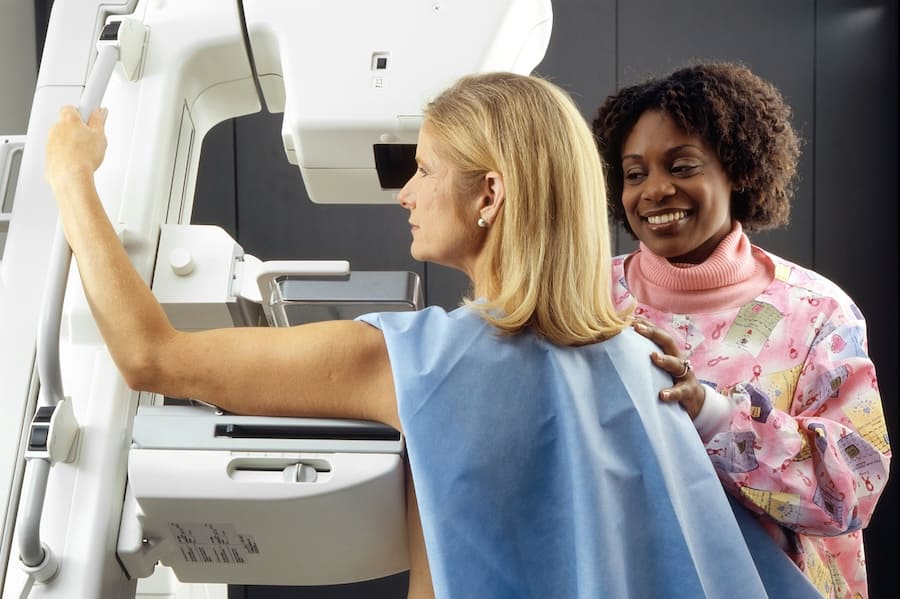
The appointment itself takes around 10 minutes. A low-dose x-ray is taken of each breast, which involves some compression, firm but brief, and each image takes only seconds. Your results are reviewed by two trained readers and sent back within roughly two weeks. Wearing a two-piece outfit makes things easier. It is worth knowing that the average age of natural menopause in Australia is 51, with perimenopause typically beginning in the mid-to-late 40s, so many women face this question well before their first automatic invitation arrives. The programme is open from age 40 and self-referral is simple.
One important point: BreastScreen is a screening service for women without breast symptoms. If you have noticed a lump, pain, nipple change or other symptom, see your doctor, who can arrange a diagnostic mammogram that looks specifically at your symptom.
When your situation is a bit more complicated
For most women the mammogram is uncomplicated. But a few specific circumstances come up regularly.
If you have dense breasts
Dense breast tissue is common, especially in younger women and in women on MHT, which can itself increase breast density over time. On a mammogram, dense tissue and breast cancer can both appear white, which means smaller changes can be harder to detect in very dense breasts. If your mammogram shows dense breasts, your radiologist may recommend additional imaging, usually a breast ultrasound, which is effective at picking up masses within dense tissue. BreastScreen Australia does not currently include ultrasound in its standard programme, so supplementary imaging requires a separate referral to a diagnostic radiology service.
A growing number of Australian BreastScreen services now include breast density information in results, and national guidance encourages women with dense breasts to discuss their personal screening approach with their doctor. Dense breasts do not stop you starting MHT. They may just mean your monitoring plan looks a little different.
If you have breast implants
Women with breast implants can and should still access breast screening. The process is the same, but implants require a few extra x-ray views to image the tissue around them properly, so the appointment runs a little longer. Let BreastScreen know you have implants when you book so the clinic can allow the right time. Implant rupture during a mammogram is extremely rare with modern equipment, which is designed to limit compression pressure. Your eligibility for screening is unchanged.
If the idea of it makes you anxious
Mammogram anxiety is real, and more common than people talk about, particularly for women who have had a difficult experience before or who find medical procedures hard. If that is you, it is worth mentioning when you book rather than pushing through in silence. BreastScreen staff are experienced in supporting anxious patients, the appointment is brief, and the imaging takes only seconds per view. Bringing a support person is generally fine, and calling ahead to say you are feeling anxious gives staff the chance to take things at your pace. If your anxiety is significant, a quick chat with your GP beforehand can help you feel more prepared.
Common questions
Is a mammogram required before starting HRT in Australia?
It is strongly recommended by clinical guidelines from the Australasian Menopause Society and RANZCOG, but it is not a blanket legal requirement. Most GPs and menopause specialists will want to see a current result, ideally from within the past 12 months, before prescribing. Your age, risk factors and circumstances shape that conversation, and a menopause-informed practitioner can help you understand what makes sense for your situation.
Are mammograms free in Australia before HRT?
Yes. Screening mammograms are free through BreastScreen Australia for all women aged 40 and over who do not have current breast symptoms. No referral needed, no out-of-pocket cost. Women aged 50 to 74 are invited automatically every two years, and women in their 40s can self-refer at any time by calling 13 20 50 or booking through their state or territory service.
Can I start MHT without a mammogram?
It depends on your individual situation and your doctor’s clinical judgment. For some women, particularly those in their 40s with no significant risk factors, a doctor may be willing to begin MHT while a mammogram is being arranged rather than waiting for results first. Most Australian GPs will want a current result before prescribing. If you have been waiting a long time and your symptoms are significantly affecting your quality of life, raise that directly with your doctor rather than assuming the answer is simply no.
I have dense breasts. Will that stop me starting MHT?
No. Dense breasts may mean your mammogram is followed by additional imaging, such as a breast ultrasound, to get a clearer picture. If your results note high density, your GP can advise whether a referral for supplementary imaging makes sense before you start. It is a monitoring consideration, not a barrier to treatment.
Can I get a mammogram if I have breast implants?
Yes. Women with breast implants are fully eligible for BreastScreen Australia. The appointment takes a little longer, as extra x-ray views are needed to image the tissue around the implant. Let the clinic know you have implants when you book. Implant rupture during a mammogram is extremely rare with modern equipment.
Getting a mammogram before HRT in Australia is really just about starting treatment with a clear picture, not a gate between you and feeling better. For most women it is a free, 10-minute appointment with no referral and no cost, and there are clear pathways if your situation involves dense breasts, implants or anxiety about the process. You can book or read more through BreastScreen Australia. When you are ready to understand more about what MHT involves, our MHT in Australia guide covers how it works, how it is prescribed, and what to expect from your first consultation.

Author: Sharryn Ludlow
Sharryn Ludlow is an Australian founder and strategy-and-operations practitioner. She is the founder of Menopause Resource Hub (AU), a curated directory helping women find menopause-informed support. Sharryn has worked across travel operations, group logistics, and project support for over 20 years, and is known for a direct, grounded style that cuts through noise and focuses on what works.