
Supporting a partner through menopause: what I shared at a World Menopause Day event in NSW Parliament House
TL;DR: Supporting a partner through menopause comes down to three things: don’t take it personally, notice and act without waiting for a list, and do some reading of your own. On 22 October 2026 I shared these at NSW Parliament House for World Menopause Day, alongside my own story of five months of heavy bleeding with nobody naming perimenopause. According to the Jean Hailes for Women’s Health, the average age of natural menopause in Australia is 51, and perimenopause can start years earlier.
If we as women can’t really understand what perimenopause or menopause is, what chance do the men in our lives have of understanding it?
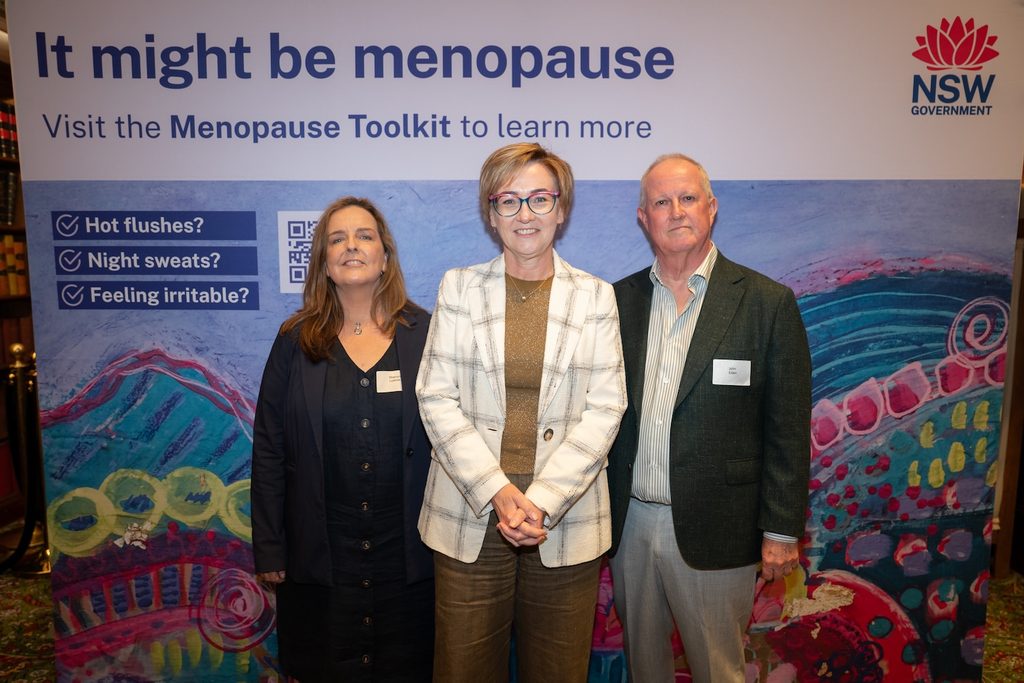
That was the first line of my keynote at NSW Parliament House last Thursday, 22 October, at a World Menopause Day event hosted by the NSW Minister for Women, Jodie Harrison. I was introduced by the Hon Bronnie Taylor, and I was honoured to share the stage with Professor John Eden, a clinician who has spent decades advocating for women’s health. He spoke after me about what’s happening in the clinic and in the research. The theme was engaging men in menopause, across the personal, the professional and the political.
I’m not a clinician. I’m a woman who went looking for answers and found a maze. This article is what I said in that room, reshaped for anyone who wants to know the practical side of supporting a partner through menopause, and for anyone who has been that partner without knowing it.
How a woman can go months without anyone naming perimenopause
A few years ago my life was full. Three kids, my husband running his business, me running mine, both of us involved in a nonprofit. I was tired and achy and not sleeping well. Like most women, I blamed myself. I was getting older, I wasn’t exercising enough, I must be the problem.
Then I started bleeding heavily, and it didn’t stop. It went on for five months. I kept telling myself it would pass. My husband didn’t know what to say to me about it, and honestly, neither did I.
When I finally saw a GP, the blood tests showed low iron and probable anaemia. I was sent for internal scans, and asked why I’d waited so long. I had no answer, because I didn’t understand what was happening in my own body. A referral to a gynaecologist followed. She looked at my results on a screen and said we’d book me in for surgery. I asked whether I was sick. She said no, but better safe than sorry.
At no point on that whole journey did anyone mention perimenopause or menopause. So I went searching, through Google, Google Maps and website after website, trying to work out who I could actually trust. I couldn’t find a straight answer.
Perimenopause is the journey, menopause is the day
In plain terms: menopause is a single day, the day a woman has gone 12 months without a period. Everything leading up to it is perimenopause, the transition, which often lasts several years. Hormones don’t fade out gradually. They spike and crash, sometimes within the same day.
The Jean Hailes for Women’s Health describes the same pattern. Most Australian women reach natural menopause between 45 and 55, with an average age of 51, and perimenopause often runs for around four to six years, sometimes longer.
That distinction matters, because a woman’s periods don’t have to have stopped for any of this to be happening. Women are routinely told it can’t be perimenopause because they’re still cycling. That’s wrong, and it’s one reason so many of us are dismissed.
It also isn’t only hot flushes and mood swings. The Australasian Menopause Society lists sleep problems, mood changes, aches and pains and vaginal changes among the common symptoms. Women tell us they feel exhausted and flat, they don’t feel like themselves, and sometimes they don’t want to be touched. These things look like ageing or stress, and they’re the things women feel least comfortable raising. That was exactly the trap I fell into. If you want the early picture, our guide to the first signs of perimenopause is a good place to start.
Why this is a workplace and economic issue as well as a personal one
Picture her week. She’s slept badly again. At work she loses a word mid-sentence, in front of people who’ve known her for twenty years as the sharpest person in the room. She takes another afternoon off for another appointment, pays another out-of-pocket gap, and gets no closer to an answer. Then she goes home to the kids, dinner and everything else, with nothing left in the tank.
That’s one woman. In my keynote I noted that around two in three people in the NSW public sector workforce are women, and that a quarter of that workforce is aged 45 to 54, the years of peak experience, leadership and earning power. When enough of those women step back, drop their hours or resign, it adds up.
The Australian Institute of Superannuation Trustees estimated in 2023 that menopause costs Australian women about $15.2 billion a year in lost earnings and super. These are modelled estimates rather than official figures, but the direction is clear. It’s experience walking out the door, and more pressure on the health system. Our piece on how perimenopause quietly changes the way you work goes deeper on what that looks like day to day.
So this isn’t only my story. It belongs to every manager, leader and partner in the room.
What exists now, and where women still fall through the gaps
There has been real progress. A Medicare menopause and perimenopause health assessment began on 1 July 2025, with a longer GP appointment dedicated to the topic, as RACGP’s NewsGP explains. And New South Wales completed the rollout of its statewide menopause service in October 2025.
But the question I kept asking in my speech was: what happens after that first appointment? In many clinics menopause is one box ticked alongside diabetes and cholesterol. A ticked box doesn’t mean the person treating you understands it. Some do. Plenty don’t, and GPs are under enormous pressure to know a bit of everything.
One of the doctors who encouraged me early on put it simply: menopause isn’t classified as a sickness, so it has never had doctors’ full attention.
So women fill the gap themselves. Go into any online community and you’ll find thousands of them comparing notes, trading advice and trying to work out which doctor to trust, often because the last one gave a completely different answer to the one before. They’re asking the question I was asking: who do I actually trust with my health?
Supporting a partner through menopause: three things that help
The answer to that question isn’t one more isolated service. It’s collaboration, and it can start at home. I’m not here to make men the bad guys. My husband has tried hard to understand, even when he had no idea where to begin, and some days he throws his hands up and says, I just can’t win.
What actually helped wasn’t him becoming a medical expert. It was the night I came home late, completely flat, and the dishes were done and dinner was on the table. I hadn’t asked. There was no list. He’d just noticed. For the men in the room, I offered three simple things.
- Don’t take it personally
What she’s going through is happening in her body, not to your relationship. Mood changes, withdrawal and low desire are common parts of the transition. The Jean Hailes page above notes that how a partner, family and community think and feel about menopause can influence how symptoms are experienced, so your reaction counts for more than you might think. - Notice and act, without waiting for a list
If she has to stop and explain the basics before you can help, that isn’t support. It’s one more job on a never-ending list. Notice that she’s flat, that she slept badly, that the week has been long, and take something off the pile. - Do your own reading
You don’t need to become an expert, but a little understanding goes a long way. Start with a plain-language overview such as Jean Hailes’ menopause guide, which includes a section on supporting your partner. The NSW Government’s Perimenopause and Menopause Toolkit also has resources for families and partners.
Why I built the Menopause Resource Hub
Nobody can carry this alone. Not her, not one practitioner, not one department. That is why I built the Menopause Resource Hub: an Australia-wide directory of practitioners who understand perimenopause and menopause. We have vetted over 500 practitioners so far and listed just over 300. We launched in Melbourne in January and now cover Melbourne, Sydney, Brisbane, Canberra and Adelaide, with telehealth reaching women everywhere.
It is deliberately cross-disciplinary, because menopause is a whole-of-life transition, not a single medical event. It takes a team: the GP, the dietitian, the physio, the counsellor, the trainer, working alongside medical care rather than instead of it. If you’re not sure where to begin, our menopause support in Australia guide explains the different types of support, and you can browse perimenopause and menopause care practitioners in the directory.
I was also proud to share at the event that Menopause Resource Hub is now listed under “Where to get help” in Women NSW’s Perimenopause and Menopause Toolkit. It is a privilege to be part of helping Australian women, and to partner with providers across the country who focus on this stage of life. We are continuing to build the site so it serves women and the people who support them.
Frequently asked questions
How can I support my partner through menopause?
Supporting a partner through menopause starts with understanding that her symptoms are happening in her body, not to your relationship. Notice what she needs and act without waiting to be asked, read a reliable guide such as Jean Hailes’ menopause page, and encourage her to see a menopause-informed GP or practitioner if she wants help.
What is the difference between perimenopause and menopause?
Menopause is the single day a woman has gone 12 months without a period. Perimenopause is the transition leading up to it, which can last several years. Symptoms can begin while periods are still happening, so having a regular cycle doesn’t rule perimenopause out.
What are the symptoms of perimenopause besides hot flushes?
Perimenopause symptoms include disrupted sleep, mood changes, brain fog, joint aches, tiredness and vaginal dryness, as well as changes to periods. According to the Australasian Menopause Society, symptoms vary widely between women, and many are easily mistaken for stress or ageing.
Can menopause affect a relationship?
Menopause can affect relationships because fatigue, mood changes and lower desire change how a woman feels day to day. Open conversation, patience and practical help from a partner can make a real difference, and professional support from a GP or counsellor is available if the strain continues.
Where can Australian women find menopause support?
Australian women can start with a GP, who can offer a Medicare menopause and perimenopause health assessment, and then look for menopause-informed practitioners in their area or via telehealth. The Menopause Resource Hub directory lists practitioners in Melbourne, Sydney, Brisbane, Canberra and Adelaide, and is linked in the NSW Government’s menopause toolkit.
Where to from here
Lived experience tells you where it hurts. Clinical expertise tells you what to do about it. Women shouldn’t have to find their way through this alone, and when the right people collaborate, at home, at work and in places like Parliament House, they won’t have to. If you’re supporting someone you love, your next step can be as small as noticing today. When you’re ready for a practitioner, the Menopause Resource Hub is here to help.
This content is informational and supports discovery. It does not replace personalised medical advice from a qualified healthcare professional. If you have concerns about your symptoms or treatment options, please speak with your GP or a menopause-informed practitioner.

Author: Sharryn Ludlow
Sharryn Ludlow is an Australian founder and strategy-and-operations practitioner. She is the founder of Menopause Resource Hub (AU), a curated directory helping women find menopause-informed support. Sharryn has worked across travel operations, group logistics, and project support for over 20 years, and is known for a direct, grounded style that cuts through noise and focuses on what works.